Boeing 787 Dreamliner – Redefining Long-Haul Air Travel
Discover the Boeing 787 Dreamliner family, featuring advanced composite construction, fuel-efficient engines, improved passenger comfort and next-generation flight technologies.
- First flight
- 15 December 2009
- Introduced
- 26 October 2011 (All Nippon Airways)
- Number built
- 1,200+
- Range
- 14,140 km (7,635 nautical miles)

Introduction
Overview
The Boeing 787 Dreamliner is one of the most technologically advanced commercial aircraft ever developed. It introduced extensive use of carbon-fibre composite materials, advanced aerodynamics and highly efficient engines to significantly reduce fuel consumption, operating costs and environmental impact.
The Boeing 787 family consists of the Boeing 787-8, Boeing 787-9 and Boeing 787-10, offering airlines exceptional flexibility across medium- and ultra-long-haul routes.
The aircraft features a next-generation passenger cabin with larger windows, improved humidity, lower cabin altitude, LED mood lighting and quieter interiors, dramatically improving passenger comfort compared with previous-generation aircraft.
Powered by either the General Electric GEnx or Rolls-Royce Trent 1000 engines, the Boeing 787 has become a cornerstone of modern international airline fleets and continues to expand Boeing's leadership in fuel-efficient long-range aviation.
At a glance
- Type
- Wide-body Twin-Engine Jet Airliner
- Role
- Long-Range Wide-Body Passenger Airliner
- Programme status
- In Production
- Production
- 2007–Present
Primary operators
History
The Boeing 787 programme was launched in 2004 to replace aging Boeing 767 aircraft and compete with Airbus's next-generation wide-body aircraft.
Initially known as the Boeing 7E7, the aircraft emphasized fuel efficiency, environmental performance and passenger comfort through extensive use of composite materials and advanced manufacturing techniques.
The Boeing 787 completed its maiden flight on 15 December 2009 after an extensive development programme and entered commercial service with All Nippon Airways on 26 October 2011.
Since then, the Dreamliner has become one of Boeing's fastest-selling wide-body aircraft, opening numerous new long-haul routes that were previously uneconomical with larger aircraft.
Development
The Boeing 787 represented one of the most ambitious commercial aircraft programmes in aviation history.
Approximately fifty percent of the aircraft's primary structure is manufactured from carbon-fibre reinforced composites, significantly reducing weight while improving corrosion resistance and fatigue life.
The programme also introduced advanced electrical systems replacing many traditional pneumatic systems, resulting in improved efficiency and simplified maintenance.
Continuous development has expanded the family from the original Boeing 787-8 to the larger Boeing 787-9 and Boeing 787-10 while incorporating software improvements, manufacturing refinements and operational enhancements.
Milestones
Programme Timeline
First flight
15 December 2009
Entered service
26 October 2011 (All Nippon Airways)
Production
2007–Present
Retirement
Not Applicable
Current status
Passenger service worldwide
Aircraft Design
The Boeing 787 Dreamliner incorporates one of the highest percentages of composite materials ever used in a commercial aircraft. Carbon-fibre reinforced polymer structures make up approximately half of the aircraft's primary structure by weight, reducing overall mass while improving durability.
Its advanced supercritical wing features flexible composite construction with raked wingtips that improve aerodynamic efficiency during all phases of flight.
The aircraft's smooth fuselage, advanced engine nacelles and optimized aerodynamics contribute to significantly lower drag and reduced fuel consumption compared with previous-generation wide-body aircraft.
Large electronically dimmable windows, quieter cabin systems and improved environmental controls create one of the most comfortable passenger experiences in commercial aviation.
Cockpit
The Boeing 787 flight deck incorporates Boeing's most advanced digital cockpit technologies.
Cockpit features include:
- Five Large Multifunction LCD Displays
- Dual Flight Management Computers
- Fly-by-Wire Flight Controls
- Dual Head-Up Displays
- Electronic Checklists
- Electronic Flight Bags
- Synthetic Vision Capability
- Advanced Weather Radar
- TCAS II
- Enhanced GPWS
- ADS-B
- Satellite Communications
The cockpit emphasizes commonality with the Boeing 777X while significantly reducing pilot workload through automation and intuitive display systems.
Cabin
The Boeing 787 passenger cabin was specifically designed to improve long-haul passenger comfort.
Features include:
- Larger electronically dimmable windows
- Lower cabin altitude (approximately 6,000 ft)
- Higher cabin humidity
- LED mood lighting
- Larger overhead bins
- Improved air filtration
- Reduced cabin noise
- Spacious twin-aisle layout
- Multiple premium seating options
These features help reduce passenger fatigue during long-duration international flights.
Engines
The Boeing 787 is powered by one of two advanced engine families:
- General Electric GEnx-1B
- Rolls-Royce Trent 1000
Both engines incorporate composite fan blades, advanced combustor technology, high bypass ratios and modern digital engine controls.
Compared with earlier wide-body aircraft engines, they significantly reduce fuel consumption, emissions and external noise while improving maintenance efficiency.
Flight Controls
The Boeing 787 utilizes a fully digital fly-by-wire flight control system featuring multiple redundant flight control computers and advanced flight envelope protection.
Electrical actuation replaces many traditional hydraulic and pneumatic systems, reducing weight while improving reliability and maintenance efficiency.
Avionics
The Boeing 787 incorporates Boeing's latest integrated avionics architecture featuring advanced flight management systems, synthetic vision capability, electronic flight bags, ADS-B, satellite communications, predictive maintenance systems and comprehensive aircraft health monitoring.
Real-time diagnostics enable airlines to monitor aircraft health throughout every flight.
Landing Gear
The Boeing 787 employs a hydraulically actuated retractable tricycle landing gear consisting of a twin-wheel nose gear and two four-wheel main landing gear assemblies.
The landing gear incorporates lightweight materials, carbon brakes and advanced steering systems to improve braking performance while reducing maintenance requirements.
Performance
The Boeing 787 delivers industry-leading efficiency on medium- and long-haul routes.
Typical performance includes:
- Cruise Speed: Mach 0.85
- Maximum Speed: Mach 0.90
- Service Ceiling: 43,100 ft
- Range: Up to approximately 14,140 km depending on variant
The aircraft consumes approximately 20–25% less fuel than the aircraft it was designed to replace.
Maintenance
The Boeing 787 incorporates predictive maintenance systems, modular components, composite airframe structures and extensive onboard diagnostics.
Composite materials significantly reduce corrosion inspections while advanced health-monitoring systems improve aircraft availability and reduce maintenance costs.
Safety
The Boeing 787 incorporates multiple redundant fly-by-wire computers, advanced weather radar, TCAS II, Enhanced GPWS, predictive windshear detection, electronic checklists, fire detection and suppression systems, emergency oxygen systems, cockpit voice recording and flight data recording.
The aircraft meets modern FAA and EASA certification standards and continues to receive operational improvements through software and systems updates.
Reference
Technical Specifications
Full dimensional, weight, powerplant and performance data.
Crew & capacity
- Crew
- 2 (Captain and First Officer) + Cabin Crew
- Passengers
- 296 (Typical Two-Class), up to 420 in high-density configuration
Dimensions
- Length
- 62.81 m (206 ft 1 in)
- Wingspan
- 60.12 m (197 ft 3 in)
- Height
- 17.02 m (55 ft 10 in)
- Fuselage width
- 5.77 m (18 ft 11 in)
- Cabin width
- 5.49 m (18 ft)
- Wheelbase
- 25.85 m (84 ft 10 in)
Weights
- Empty weight
- Approximately 128,800 kg (283,950 lb)
- Operating weight
- Approximately 129,000 kg (284,400 lb)
- Max takeoff weight
- 254,000 kg (560,000 lb)
- Max landing weight
- 193,000 kg (425,500 lb)
- Max payload
- Approximately 45,000 kg (99,200 lb)
- Fuel capacity
- 126,206 L (33,340 US gal)
Powerplant
- Engines
- 2 × High-Bypass Turbofan Engines
- Engine manufacturer
- General Electric / Rolls-Royce
- Engine model
- GEnx-1B / Trent 1000
- Thrust
- 71,000–76,100 lbf (316–338 kN) each
Performance
- Maximum speed
- 954 km/h (Mach 0.90)
- Cruise speed
- 903 km/h (Mach 0.85)
- Stall speed
- Approximately 241 km/h (130 knots)
- Range
- 14,140 km (7,635 nautical miles)
- Service ceiling
- 43,100 ft (13,140 m)
- Rate of climb
- Approximately 2,500 ft/min (762 m/min)
- Takeoff distance
- Approximately 2,900 m (9,500 ft)
- Landing distance
- Approximately 1,900 m (6,230 ft)
Fuel & operating limits
- Fuel consumption
- Approximately 20–25% lower than previous-generation aircraft on comparable missions
- Endurance
- Up to 18 hours
- Maximum altitude
- 43,100 ft
- Max operating Mach
- Mach 0.90
- Runway requirement
- Typically 2,700–3,200 m depending on aircraft weight and environmental conditions
Programme
- First flight
- 15 December 2009
- Introduction
- 26 October 2011 (All Nippon Airways)
- Production years
- 2007–Present
- Number built
- 1,200+
- Unit cost
- Approximately US$292 million (787-9 list price)
Variants
Boeing 787-8
The original Dreamliner variant designed for medium- and long-haul international routes with excellent fuel efficiency.
Boeing 787-9
The most successful member of the Dreamliner family, offering increased passenger capacity and extended range.
Boeing 787-10
The longest Dreamliner variant, optimized for high-capacity medium- and long-haul routes with outstanding operating economics.
Major Operators
- All Nippon Airways
- United Airlines
- American Airlines
- Qatar Airways
- British Airways
- Air India
- Japan Airlines
- Singapore Airlines
- Etihad Airways
- Air Canada
- LATAM Airlines
- KLM
- Virgin Atlantic
- Ethiopian Airlines
- Qantas
Advantages & Limitations
Advantages
- Approximately 20–25% lower fuel consumption than previous-generation aircraft.
- Extensive use of carbon-fibre composite materials reduces weight and corrosion.
- Lower cabin altitude reduces passenger fatigue.
- Higher cabin humidity improves passenger comfort.
- Large electronically dimmable windows.
- Exceptionally quiet passenger cabin.
- Outstanding long-range capability.
- Advanced fly-by-wire flight controls.
- Predictive maintenance systems improve aircraft availability.
- Excellent operating economics for airlines.
Limitations
- Higher acquisition cost than older aircraft.
- Composite structural repairs require specialized techniques.
- Initial production experienced supply-chain delays.
- Early lithium-ion battery issues required design modifications.
- Requires specialized maintenance training.
- Long development programme increased programme costs.
- Higher purchase price compared with refurbished older aircraft.
- Complex electrical architecture.
- Replacement composite components can be expensive.
- Large airport infrastructure required for international operations.
Interesting Facts
- Approximately 50% of the primary structure is carbon-fibre composite.
- The Boeing 787 was originally known as the Boeing 7E7.
- Its windows are approximately 30% larger than those on earlier Boeing aircraft.
- The windows use electronic dimming instead of traditional window shades.
- The aircraft operates with a cabin altitude of approximately 6,000 feet.
- Advanced humidity systems improve passenger comfort during long flights.
- The Boeing 787 introduced a 'More Electric Aircraft' architecture replacing many pneumatic systems.
- The GEnx and Trent 1000 engines significantly reduce external noise.
- Flexible composite wings visibly bend upward during flight.
- The Dreamliner enabled airlines to open many new point-to-point international routes.
- Its advanced health-monitoring system continuously reports aircraft status to maintenance teams.
- The aircraft incorporates extensive use of titanium in high-stress structural areas.
- The Boeing 787 helped redefine fuel efficiency standards for wide-body aircraft.
- Multiple Boeing 787 world-distance demonstration flights showcased its efficiency.
- The Dreamliner remains one of Boeing's fastest-selling wide-body aircraft families.
Comparison
Versus the Airbus A350
- The Boeing 787 is optimized for medium- and long-haul routes, while the Airbus A350 primarily targets larger long-haul operations.
- The Boeing 787 entered commercial service earlier than the Airbus A350.
- Both aircraft extensively utilize composite materials.
- The Boeing 787 uses General Electric GEnx or Rolls-Royce Trent 1000 engines, while the Airbus A350 uses Rolls-Royce Trent XWB engines.
- The Boeing 787 generally offers lower seating capacity than the Airbus A350.
- The Airbus A350 provides greater maximum range on larger variants.
- Both aircraft families feature excellent passenger comfort and advanced avionics.
- The Boeing 787 pioneered many technologies later adopted across modern commercial aviation.
Interactive
Explore the Aircraft
Hover or tap a marker to identify each major part of the aircraft.
Select a marker to learn about each part of the aircraft.
Gallery

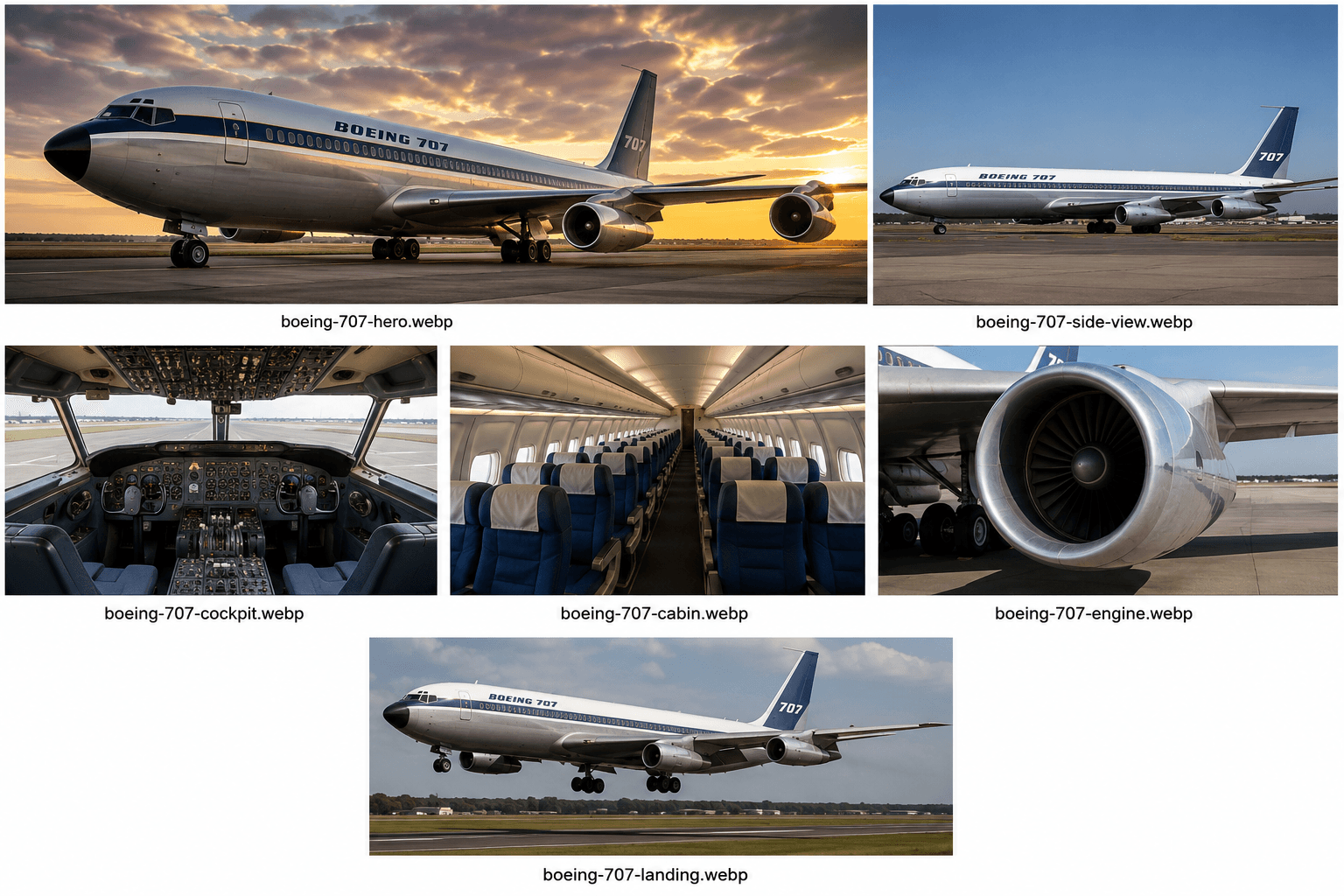
Side profile of the Boeing 787 Dreamliner showcasing its composite wing and sleek aerodynamic design. 
Modern Boeing 787 flight deck featuring advanced digital avionics and dual head-up displays. 
Passenger cabin with electronically dimmable windows, LED mood lighting and spacious interior. 
General Electric GEnx engine powering the Boeing 787 Dreamliner. 
Boeing 787 Dreamliner on final approach with landing gear deployed.
Frequently Asked Questions
Recommended Products
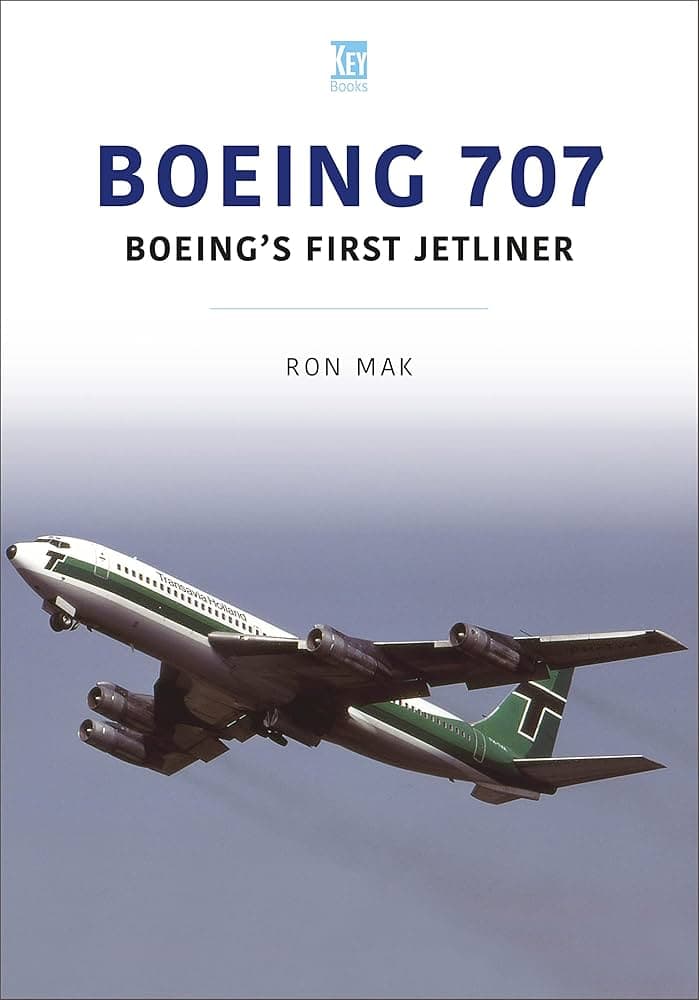
Boeing 707 History Book
Comprehensive reference covering the design, development and operational history of the Boeing 707.
Buy now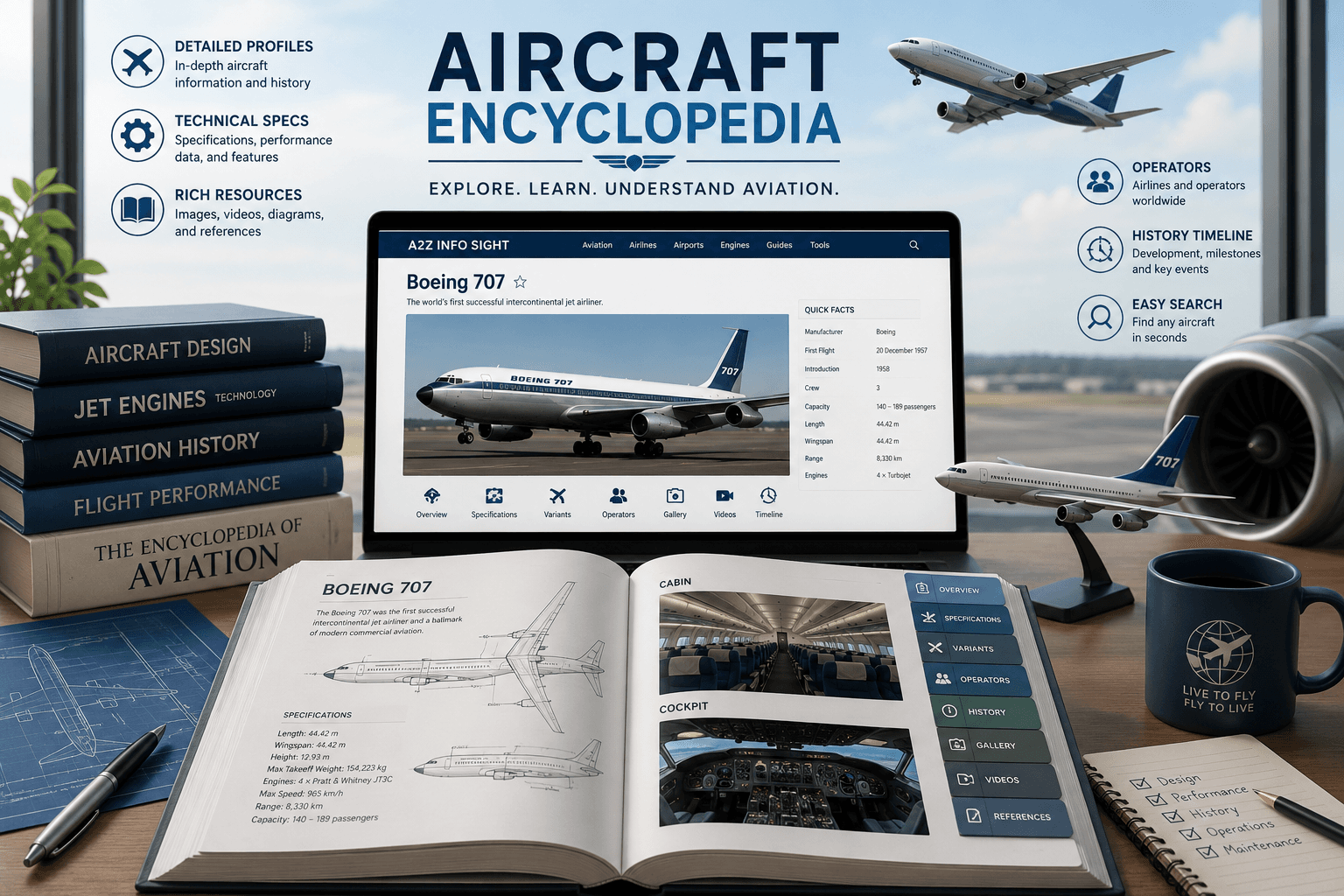
Commercial Aircraft Encyclopedia
A detailed guide covering classic and modern commercial aircraft.
Buy now


As an affiliate, A2Z InfoSight may earn from qualifying purchases.
References
Keep exploring


