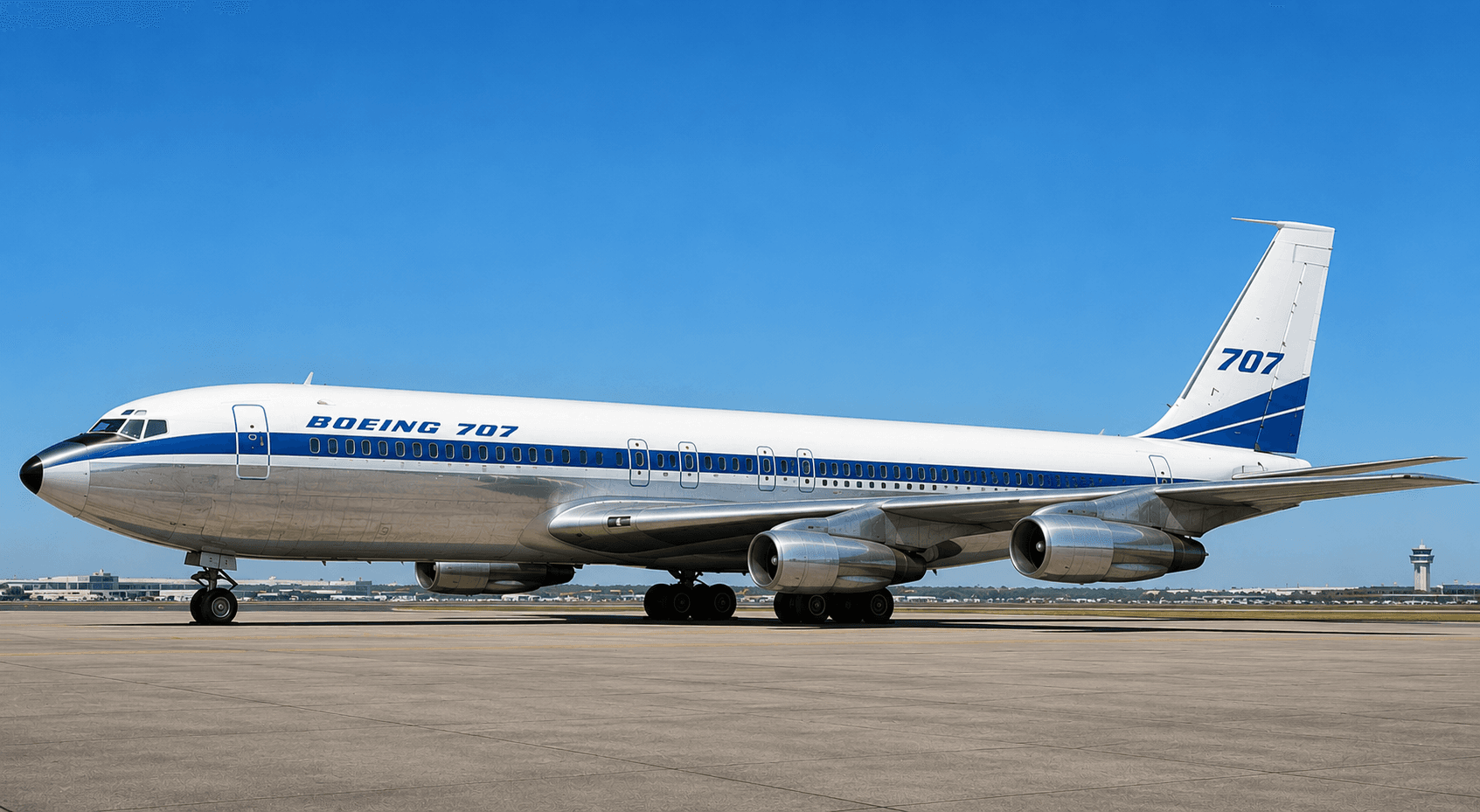
Boeing 747 – The Queen of the Skies
Discover the legendary Boeing 747 family, the world's first wide-body jumbo jet that revolutionized international air travel and cargo transportation for over five decades.
- First flight
- 9 February 1969
- Introduced
- 22 January 1970 (Pan American World Airways)
- Number built
- 1,574
- Range
- 13,450 km (7,260 nautical miles)

Introduction
Overview
The Boeing 747 is one of the most influential commercial aircraft ever built and remains an enduring symbol of long-haul aviation. Nicknamed the "Queen of the Skies," it was the world's first wide-body passenger airliner and dramatically increased airline capacity, making international air travel more accessible.
Featuring a distinctive upper deck and four-engine configuration, the Boeing 747 introduced unprecedented passenger capacity, intercontinental range and cargo capability. Since entering service in 1970, the aircraft has transported billions of passengers while serving airlines, cargo operators, governments and military organizations around the world.
Over successive generations—including the 747-100, 747-200, 747SP, 747-300, 747-400 and 747-8—the aircraft continuously evolved with improved aerodynamics, more efficient engines, advanced avionics and greater range.
A total of 1,574 Boeing 747 aircraft were produced before production concluded in 2023, ending one of the most successful and iconic programmes in aviation history.
At a glance
- Type
- Wide-body Four-Engine Jet Airliner
- Role
- Long-Range Wide-Body Passenger and Cargo Airliner
- Programme status
- Production Ended
- Production
- 1968–2023
Primary operators
History
During the 1960s, rapidly increasing passenger demand created the need for a much larger commercial aircraft. Juan Trippe, founder of Pan American World Airways, challenged Boeing to build an aircraft capable of carrying more than twice the passengers of the Boeing 707 while reducing operating costs per seat.
Led by legendary engineer Joe Sutter, Boeing developed the Boeing 747 in record time. Construction of the world's largest aircraft manufacturing facility in Everett, Washington, became one of the largest industrial projects ever undertaken.
The Boeing 747 completed its maiden flight on 9 February 1969 and entered commercial service with Pan American World Airways on 22 January 1970 between New York and London.
Throughout the following decades, the Boeing 747 became the flagship aircraft of major international airlines and transformed long-distance travel. It also became the preferred aircraft for cargo operations due to its enormous payload capacity and unique nose-loading capability on freighter variants.
Development
The Boeing 747 programme represented one of the most ambitious engineering projects in aviation history. Engineers designed an entirely new wide-body aircraft featuring a two-aisle cabin, high-capacity structure and four powerful turbofan engines capable of intercontinental operations.
Successive variants introduced numerous technological improvements. The Boeing 747-400 added a modern glass cockpit, winglets and advanced avionics, while the Boeing 747-8 incorporated new General Electric GEnx engines, redesigned wings and technology derived from the Boeing 787 Dreamliner.
Throughout more than five decades of production, the Boeing 747 continually adapted to changing airline requirements while remaining one of the world's most recognizable aircraft.
Milestones
Programme Timeline
First flight
9 February 1969
Entered service
22 January 1970 (Pan American World Airways)
Production
1968–2023
Retirement
Passenger service continues with selected airlines; cargo service remains active worldwide
Current status
Limited passenger service; extensive cargo, government and VIP operations
Aircraft Design
The Boeing 747 pioneered the wide-body commercial aircraft concept with its distinctive twin-aisle fuselage and partial upper deck. Originally intended as a future cargo-loading area, the upper deck became one of the aircraft's most recognizable design features.
The aircraft incorporates a swept low wing, four high-bypass turbofan engines, conventional tail assembly and a robust wide-body fuselage capable of carrying hundreds of passengers or substantial cargo payloads.
Later variants introduced blended aerodynamics, winglets, lightweight composite materials and improved structural efficiency. The Boeing 747-8 features redesigned raked wingtips and advanced wing aerodynamics inspired by the Boeing 787.
The aircraft's freighter variants feature an upward-opening nose cargo door, enabling oversized cargo to be loaded directly into the main deck—one of the Boeing 747's defining capabilities.
Cockpit
The Boeing 747 cockpit evolved significantly throughout its production history. Early Boeing 747-100 and 747-200 aircraft required a Captain, First Officer and Flight Engineer, while the Boeing 747-400 introduced a fully digital glass cockpit eliminating the need for a flight engineer.
Modern Boeing 747 cockpits typically include:
- Six large LCD flight displays
- Dual Flight Management Computers
- Digital Autopilot
- Flight Director
- Weather Radar
- Electronic Checklists
- TCAS II
- Enhanced GPWS
- Satellite Communications
- GPS Navigation
- ADS-B capability
- Digital Engine Indication Systems
The Boeing 747-8 cockpit shares considerable commonality with the Boeing 787 Dreamliner, simplifying pilot transition and reducing airline training requirements.
Cabin
The Boeing 747 introduced the world's first twin-aisle commercial passenger cabin, revolutionizing passenger comfort on long-haul flights.
Depending on the variant and airline configuration, passenger capacity ranges from approximately 366 to over 600 passengers.
Cabin features include:
- Twin-aisle wide-body layout
- Multiple seating classes
- Upper deck premium seating or lounge
- Large cargo holds
- Advanced environmental control systems
- Long-haul cabin amenities
- Modern LED lighting on newer aircraft
- Spacious galleys and lavatories
Many airlines configured the iconic upper deck as an exclusive business or first-class cabin.
Engines
Throughout its production life, the Boeing 747 has been powered by several engine families including the Pratt & Whitney JT9D, General Electric CF6, Rolls-Royce RB211 and General Electric GEnx engines on the Boeing 747-8.
These high-bypass turbofan engines provide exceptional thrust, reliability and long-range performance while supporting payloads unmatched by earlier commercial aircraft.
The latest GEnx engines significantly reduce fuel consumption, emissions and external noise compared with previous Boeing 747 generations.
Flight Controls
The Boeing 747 utilizes hydraulically powered conventional flight controls with multiple redundant hydraulic systems. Large spoilers, high-lift devices and sophisticated autopilot systems provide excellent stability despite the aircraft's enormous size.
Avionics
Modern Boeing 747 variants feature integrated digital avionics including advanced flight management systems, electronic flight displays, GPS navigation, weather radar, TCAS II, Enhanced GPWS, satellite communications and comprehensive aircraft health monitoring systems.
Landing Gear
The Boeing 747 employs one of the most robust landing gear systems in commercial aviation. The aircraft uses a retractable tricycle configuration with a twin-wheel nose gear and four four-wheel main landing gear assemblies, distributing the aircraft's immense weight across 18 wheels.
This design enables operation from major international airports while supporting extremely high maximum takeoff weights.
Performance
The Boeing 747 established new standards for long-range passenger and cargo operations.
Typical performance characteristics include:
- Cruise Speed: Mach 0.85
- Maximum Speed: Mach 0.92
- Service Ceiling: 45,000 ft
- Range: Up to approximately 14,815 km depending on the variant
Its combination of speed, payload capacity and intercontinental range made the Boeing 747 the flagship aircraft of airlines around the world for decades.
Maintenance
The Boeing 747 is designed for intensive long-haul operations and incorporates modular systems, comprehensive onboard diagnostics and accessible maintenance panels. Scheduled inspections include structural checks, engine borescope inspections, landing gear overhauls, avionics diagnostics and corrosion prevention programmes.
Its widespread global support network has enabled many Boeing 747 aircraft to remain in service for several decades.
Safety
The Boeing 747 incorporates multiple redundant flight-critical systems including four independent hydraulic systems, multiple electrical power sources, advanced fire detection and suppression systems, TCAS II, Enhanced GPWS, weather radar, emergency oxygen systems and comprehensive flight data recording.
Over more than fifty years of service, continual technological improvements have maintained the Boeing 747 as one of the safest and most respected long-haul aircraft families in commercial aviation.
Reference
Technical Specifications
Full dimensional, weight, powerplant and performance data.
Crew & capacity
- Crew
- 2 (Captain and First Officer) + Cabin Crew
- Passengers
- 416 (Typical Three-Class), up to 524 in high-density configuration
Dimensions
- Length
- 70.67 m (231 ft 10 in)
- Wingspan
- 64.44 m (211 ft 5 in)
- Height
- 19.41 m (63 ft 8 in)
- Fuselage width
- 6.50 m (21 ft 4 in)
- Cabin width
- 6.10 m (20 ft)
- Wheelbase
- 27.30 m (89 ft 7 in)
Weights
- Empty weight
- Approximately 183,500 kg (404,600 lb)
- Operating weight
- Approximately 184,600 kg (407,000 lb)
- Max takeoff weight
- 396,890 kg (875,000 lb)
- Max landing weight
- 285,760 kg (630,000 lb)
- Max payload
- Approximately 112,760 kg (248,600 lb)
- Fuel capacity
- 216,840 L (57,285 US gal)
Powerplant
- Engines
- 4 × High-Bypass Turbofan Engines
- Engine manufacturer
- General Electric / Pratt & Whitney / Rolls-Royce
- Engine model
- CF6-80C2, PW4056 or RB211-524G/H depending on operator
- Thrust
- 56,000–63,300 lbf (249–282 kN) each
Performance
- Maximum speed
- 988 km/h (Mach 0.92)
- Cruise speed
- 913 km/h (Mach 0.85)
- Stall speed
- Approximately 278 km/h (150 knots)
- Range
- 13,450 km (7,260 nautical miles)
- Service ceiling
- 45,100 ft (13,750 m)
- Rate of climb
- Approximately 1,800 ft/min (549 m/min)
- Takeoff distance
- Approximately 3,100 m (10,170 ft)
- Landing distance
- Approximately 2,000 m (6,560 ft)
Fuel & operating limits
- Fuel consumption
- Approximately 10,500–11,500 L/hour depending on payload and flight profile
- Endurance
- Up to 16 hours
- Maximum altitude
- 45,100 ft
- Max operating Mach
- Mach 0.92
- Runway requirement
- Typically 3,000–3,500 m depending on aircraft weight and environmental conditions
Programme
- First flight
- 9 February 1969
- Introduction
- 22 January 1970 (Pan American World Airways)
- Production years
- 1968–2023
- Number built
- 1,574
- Unit cost
- Approximately US$228 million (747-400 list price)
Variants
Boeing 747-100
The original production version that introduced the world's first wide-body jumbo jet and transformed international air travel.
Boeing 747-200
Improved version featuring more powerful engines, increased range and higher maximum takeoff weight.
Boeing 747SP
Special Performance version with a shortened fuselage and exceptional long-range capability for ultra-long-haul routes.
Boeing 747-300
Introduced a stretched upper deck, providing additional seating capacity and improved passenger comfort.
Boeing 747-400
The most successful passenger variant featuring a glass cockpit, winglets, advanced avionics and significantly improved fuel efficiency.
Boeing 747-400ER
Extended Range version with increased fuel capacity and higher maximum takeoff weight for longer international routes.
Boeing 747-8 Intercontinental
The latest passenger version featuring GEnx engines, redesigned wings, Boeing 787-derived technology and improved efficiency.
Boeing 747-8 Freighter
The newest cargo variant incorporating a nose-loading cargo door, improved payload capability and modern fuel-efficient engines.
Major Operators
- Pan American World Airways
- British Airways
- Lufthansa
- Japan Airlines
- Singapore Airlines
- Korean Air
- Air China
- Atlas Air
- Cargolux
- UPS Airlines
- Cathay Pacific Cargo
- Qantas
- Virgin Atlantic
- KLM
- Thai Airways
Advantages & Limitations
Advantages
- Iconic wide-body design with exceptional passenger capacity.
- Outstanding long-range capability for intercontinental operations.
- Excellent payload capability for passenger and cargo missions.
- Highly reliable four-engine configuration.
- Spacious twin-aisle cabin providing superior passenger comfort.
- Large upper deck suitable for premium seating or lounges.
- Unique nose-loading capability on freighter variants.
- Outstanding dispatch reliability developed over five decades.
- Global maintenance and spare parts support.
- One of the most recognizable aircraft ever built.
Limitations
- Higher fuel consumption than modern twin-engine aircraft.
- Requires long runways and large airport infrastructure.
- Four engines increase maintenance costs.
- Higher operating costs than newer wide-body aircraft.
- Passenger demand shifted toward smaller twin-engine aircraft.
- Production ended in 2023.
- Limited number of passenger operators remain.
- Large airport gates required for efficient operations.
- Crew and airport handling costs are relatively high.
- Lower economic efficiency on routes with moderate passenger demand.
Interesting Facts
- The Boeing 747 was nicknamed the 'Queen of the Skies'.
- It was the world's first successful wide-body passenger airliner.
- Joe Sutter is widely regarded as the 'Father of the Boeing 747'.
- The Boeing 747 transformed international tourism by reducing seat-mile costs.
- The aircraft's upper deck was originally intended to simplify cargo conversion.
- The Boeing 747 has transported billions of passengers since 1970.
- The Boeing 747-400 introduced a two-pilot glass cockpit, eliminating the flight engineer position.
- The Boeing 747-8 incorporates technology derived from the Boeing 787 Dreamliner.
- Freighter versions feature a unique upward-opening nose cargo door.
- The aircraft has served as Air Force One for multiple U.S. Presidents.
- NASA modified a Boeing 747 to carry the Space Shuttle Orbiter.
- More than 1,500 Boeing 747 aircraft were produced over 55 years.
- The Boeing 747 became one of the most photographed aircraft in aviation history.
- Its distinctive hump makes it instantly recognizable worldwide.
- Many Boeing 747 freighters are expected to remain in service for decades.
Comparison
Versus the Airbus A380
- The Boeing 747 features a partial upper deck, whereas the Airbus A380 has two full-length passenger decks.
- The Airbus A380 carries more passengers, while the Boeing 747 offers greater operational flexibility.
- The Boeing 747 Freighter includes a nose-loading cargo door, unlike the Airbus A380.
- The Boeing 747 entered service in 1970, nearly four decades before the Airbus A380.
- The Boeing 747-8 incorporates technology derived from the Boeing 787 Dreamliner.
- The Airbus A380 is optimized primarily for passenger operations, while the Boeing 747 remains highly successful in cargo service.
- Both aircraft are four-engine wide-body airliners designed for long-haul international operations.
- The Boeing 747 has significantly more variants and a much longer production history than the Airbus A380.
Interactive
Explore the Aircraft
Hover or tap a marker to identify each major part of the aircraft.
Select a marker to learn about each part of the aircraft.
Gallery

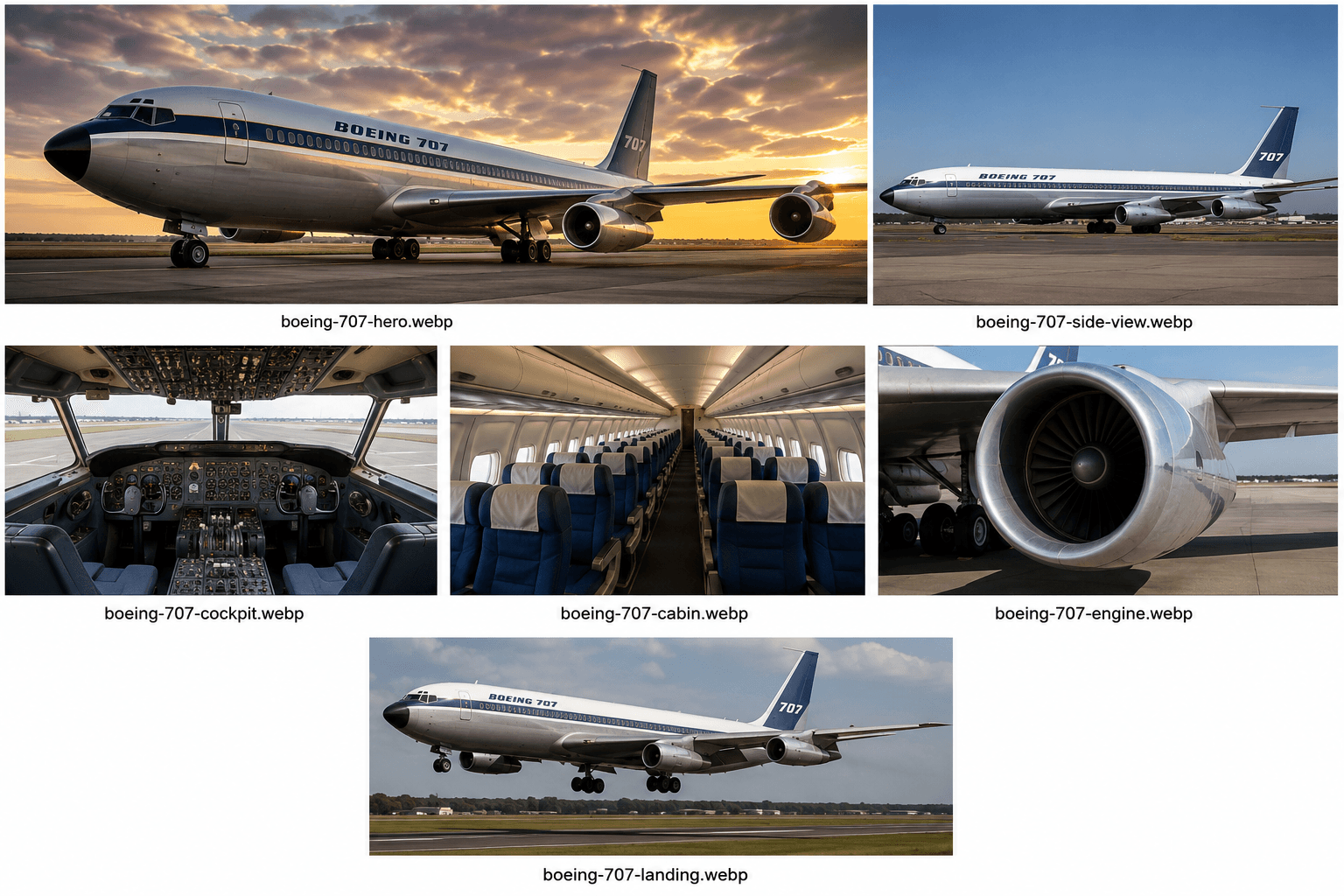
Side profile of the Boeing 747 highlighting its iconic upper deck and four-engine configuration. 
Modern Boeing 747-400/747-8 glass cockpit equipped with advanced avionics and digital flight displays. 
Spacious twin-aisle passenger cabin with multiple seating classes and long-haul amenities. 
High-bypass turbofan engine installed beneath the Boeing 747 wing, providing exceptional thrust for long-range operations. 
Boeing 747 on final approach with its characteristic eighteen-wheel landing gear deployed.
Frequently Asked Questions
Recommended Products
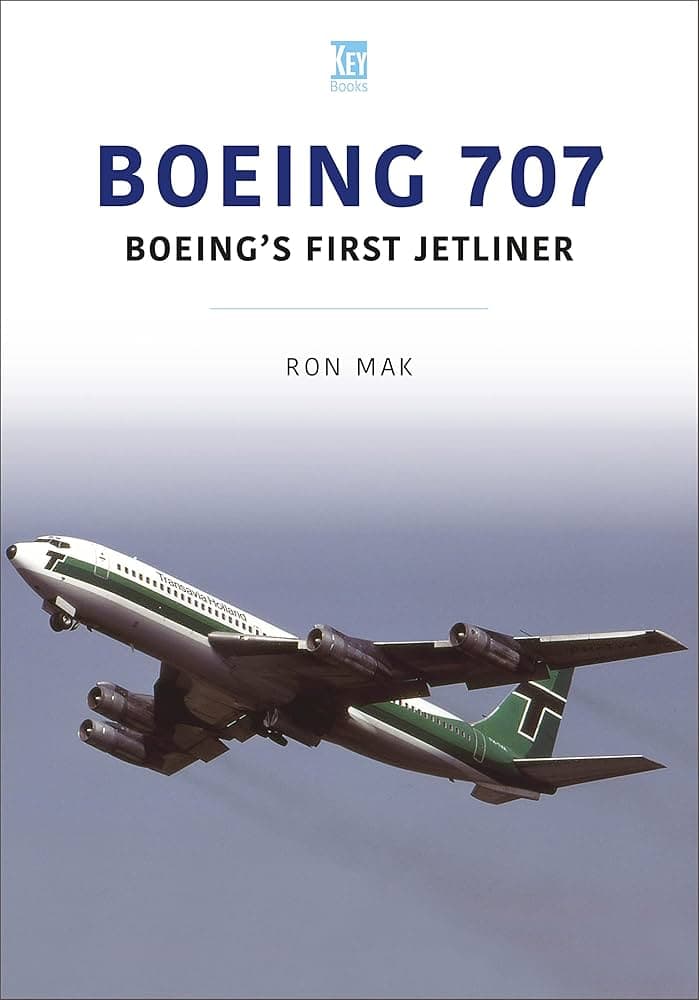
Boeing 707 History Book
Comprehensive reference covering the design, development and operational history of the Boeing 707.
Buy now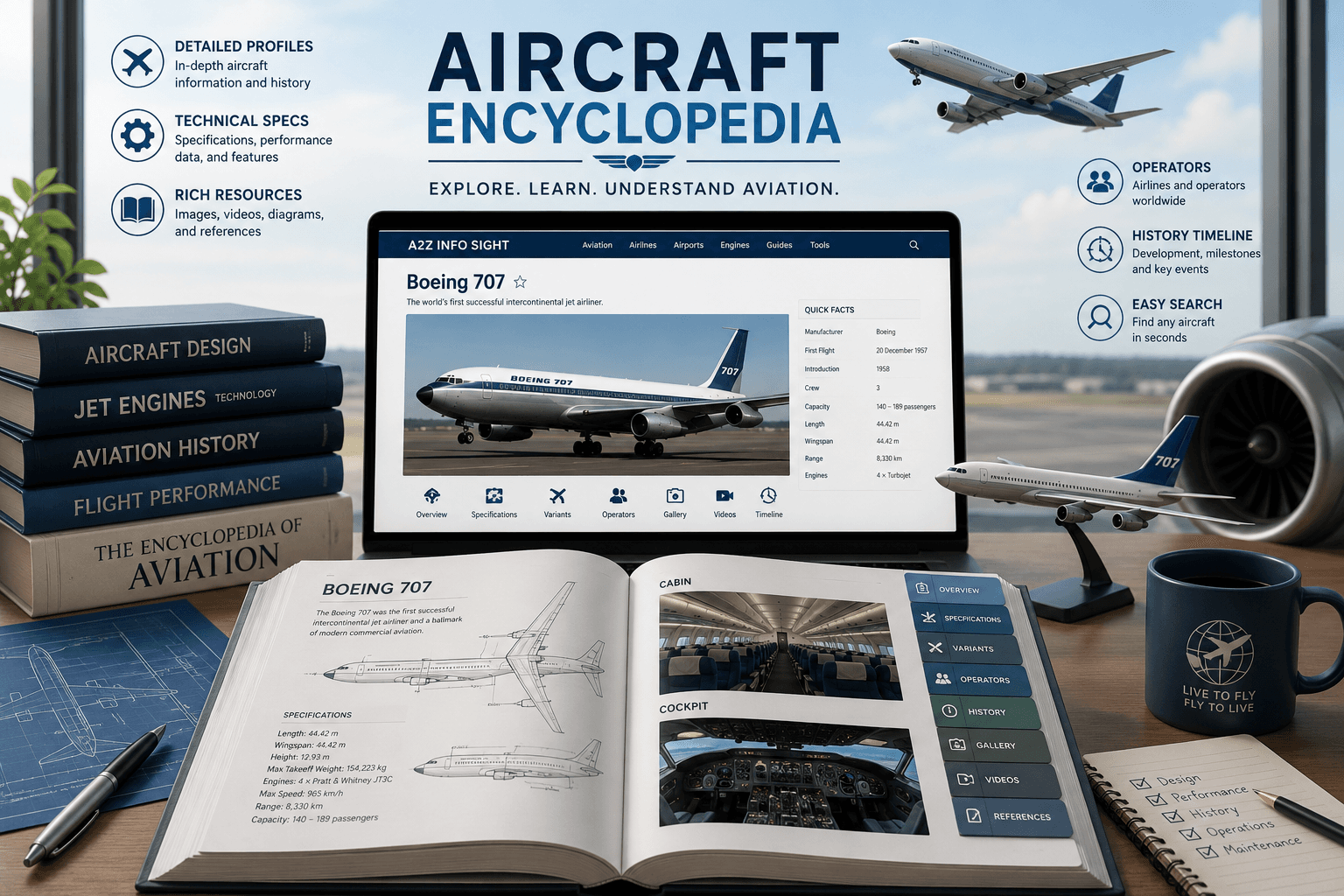
Commercial Aircraft Encyclopedia
A detailed guide covering classic and modern commercial aircraft.
Buy now


As an affiliate, A2Z InfoSight may earn from qualifying purchases.
References
Keep exploring