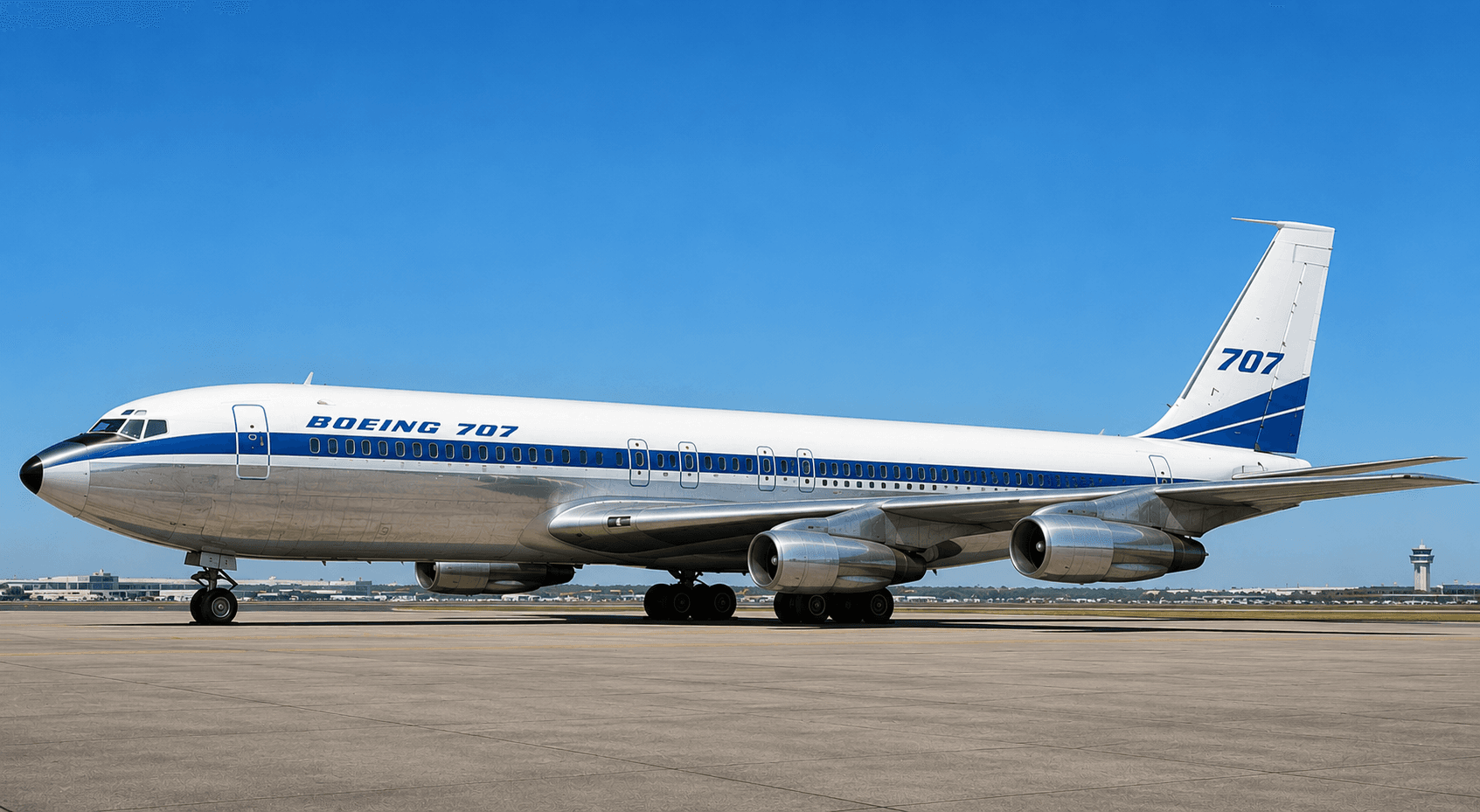
Boeing 717 – The Efficient Successor to the DC-9 Family
Explore the Boeing 717, a reliable short-haul twin-engine airliner renowned for exceptional dispatch reliability, efficient operations and passenger comfort.
- First flight
- 2 September 1998
- Introduced
- 12 October 1999 (AirTran Airways)
- Number built
- 156
- Range
- 3,815 km (2,060 nautical miles)

Introduction
Overview
The Boeing 717 is a twin-engine narrow-body commercial airliner designed for short- and medium-haul operations. Originally developed by McDonnell Douglas as the MD-95 before the company's merger with Boeing, the aircraft became the final member of the highly successful DC-9 family. Following the merger in 1997, Boeing rebranded the aircraft as the Boeing 717, continuing production while benefiting from Boeing's global support network.
Designed to replace aging DC-9 fleets, the Boeing 717 offers excellent fuel efficiency, high dispatch reliability and low operating costs for airlines operating frequent short-haul routes. Its advanced Rolls-Royce BR715 turbofan engines provide quieter operation, reduced emissions and improved performance compared to earlier aircraft in the DC-9 lineage.
The aircraft typically accommodates between 106 and 134 passengers depending on cabin configuration, making it ideal for regional and domestic services. Despite its relatively small size, the Boeing 717 offers a spacious cabin, quick turnaround capability and impressive field performance, allowing operations at airports with shorter runways.
Airlines such as Delta Air Lines and Hawaiian Airlines have praised the Boeing 717 for its exceptional reliability and suitability for high-frequency operations. Although production ended in 2006 after 156 aircraft were built, the Boeing 717 continues to serve passengers worldwide and remains one of the most dependable aircraft in its class.
At a glance
- Type
- Narrow-body, Short-to-Medium Range Jet Airliner
- Role
- Commercial Passenger Airliner
- Programme status
- In Service
- Production
- 1998–2006
Primary operators
History
The origins of the Boeing 717 can be traced back to the Douglas DC-9, one of the most successful short-haul jetliners ever produced. Over several decades, the DC-9 evolved into the MD-80 and MD-90 families, providing airlines with increasingly capable aircraft for regional and domestic operations.
During the early 1990s, McDonnell Douglas identified a market for a modern replacement for older DC-9 aircraft. The company launched the MD-95 programme, targeting airlines seeking an efficient aircraft with approximately 100 seats. The new aircraft incorporated an updated flight deck, modern Rolls-Royce BR715 engines and significant improvements in fuel efficiency and passenger comfort while retaining the proven DC-9 airframe philosophy.
In 1997, Boeing acquired McDonnell Douglas. Rather than cancelling the programme, Boeing renamed the MD-95 as the Boeing 717, making it the newest member of the Boeing commercial aircraft portfolio. AirTran Airways became the launch customer, placing the aircraft into commercial service in October 1999.
Throughout its production life, the Boeing 717 earned an outstanding reputation for reliability, operational efficiency and low maintenance costs. It became particularly popular with airlines operating frequent domestic flights where quick turnarounds and dependable performance were critical.
Although production ceased in 2006 due to limited market demand and Boeing's strategic focus on the 737 family, the Boeing 717 remains highly valued by operators. Many aircraft continue flying today, demonstrating the robust engineering inherited from the DC-9 lineage.
Development
Development of the Boeing 717 began under McDonnell Douglas as the MD-95 programme. Engineers sought to create a modern regional airliner capable of replacing aging DC-9 fleets while incorporating the latest advances in engine technology, avionics and passenger comfort.
One of the programme's most significant innovations was the adoption of Rolls-Royce BR715 high-bypass turbofan engines. These engines delivered substantial improvements in fuel efficiency, reduced noise levels and lower maintenance costs compared to earlier JT8D-powered aircraft.
Following Boeing's acquisition of McDonnell Douglas, the programme continued largely unchanged but benefited from Boeing's worldwide customer support network, engineering resources and marketing capabilities. The aircraft retained its distinctive rear-mounted engine configuration and T-tail, preserving the aerodynamic advantages that had characterized the DC-9 family for decades.
The Boeing 717 introduced a modern glass cockpit certified for two-pilot operations, eliminating the need for a flight engineer and reducing crew workload through advanced flight management systems and digital avionics. Improvements in structural design and systems integration also contributed to outstanding dispatch reliability, frequently exceeding 99 percent in airline service.
Although only 156 aircraft were produced, the Boeing 717 successfully demonstrated that a purpose-built short-haul aircraft could deliver exceptional operational efficiency, passenger comfort and long-term reliability. Today it remains one of the most respected aircraft in regional airline operations.
Milestones
Programme Timeline
First flight
2 September 1998
Entered service
12 October 1999 (AirTran Airways)
Production
1998–2006
Retirement
Still in active passenger service
Current status
Active with several airlines worldwide
Aircraft Design
The Boeing 717 inherits the proven design philosophy of the Douglas DC-9 family while incorporating numerous aerodynamic, structural and systems improvements. Designed primarily for short- and medium-haul operations, the aircraft emphasizes operational efficiency, passenger comfort and exceptional dispatch reliability.
The aircraft features a conventional low-wing monoplane configuration with two rear-mounted Rolls-Royce BR715 turbofan engines and a distinctive T-tail. This arrangement reduces cabin noise by positioning the engines away from the passenger compartment while also providing excellent aerodynamic efficiency.
Its supercritical wing was optimized for efficient cruise speeds around Mach 0.77 while providing excellent low-speed handling characteristics during takeoff and landing. High-lift devices, including leading-edge slats and double-slotted trailing-edge flaps, enable operations from relatively short runways.
Constructed primarily from lightweight aluminum alloys, the airframe incorporates modern corrosion-resistant materials and fail-safe structural principles. The fuselage retains the circular cross-section introduced with the DC-9, providing a spacious cabin while maintaining structural efficiency.
The aircraft's relatively compact dimensions make it ideal for busy regional airports with limited gate space, while its robust landing gear and efficient systems allow frequent daily operations with minimal downtime.
Overall, the Boeing 717 combines decades of proven DC-9 engineering with modern avionics, engines and systems, resulting in one of the most dependable short-haul airliners ever built.
Cockpit
The Boeing 717 features a modern glass cockpit designed for two-pilot operations. Unlike earlier members of the DC-9 family that relied heavily on analog instrumentation, the 717 incorporates advanced digital avionics that significantly reduce pilot workload while improving situational awareness.
The flight deck is equipped with six large electronic flight displays that present flight information, navigation data, engine parameters and aircraft systems in an intuitive format. A centralized Flight Management System (FMS) assists pilots with navigation, performance calculations and flight planning.
Primary flight instruments include:
- Primary Flight Display (PFD)
- Navigation Display (ND)
- Engine Indication and Crew Alerting System (EICAS)
- Digital Flight Management System
- Weather Radar Display
- Electronic Checklist System
The center pedestal houses the throttle quadrant, flap controls, speed brake lever and communication panels. Overhead panels provide access to electrical, hydraulic, fuel, pneumatic and environmental control systems.
The Boeing 717 cockpit also features an advanced autopilot and flight director capable of precision approaches, automatic altitude capture and lateral navigation, improving efficiency during all phases of flight.
Pilots appreciate the ergonomic layout, excellent external visibility and logical arrangement of controls, making the Boeing 717 one of the easiest aircraft in its class to operate.
Cabin
The Boeing 717 cabin was designed to provide passengers with a comfortable travel experience while maximizing airline operational flexibility. Depending on the operator, the aircraft typically accommodates between 106 and 134 passengers in single-class or dual-class configurations.
The cabin features a 2-3 seating arrangement, allowing a higher proportion of passengers to enjoy either a window or aisle seat compared to aircraft with six-abreast seating. Large windows provide excellent outside visibility, while improved sound insulation contributes to a quieter cabin environment.
Key cabin features include:
- Spacious overhead baggage bins
- LED or fluorescent cabin lighting (operator dependent)
- Pressurized and air-conditioned cabin
- Modern lavatories
- Full-service galley facilities
- Comfortable seating layouts
- Wide central aisle for efficient boarding
- Large passenger entry doors for rapid turnaround
The rear-mounted engine configuration significantly reduces cabin noise, particularly in the forward section of the aircraft, enhancing passenger comfort on short- and medium-haul flights.
Many airlines have upgraded the interiors with modern seating, USB charging ports and refreshed cabin décor, extending the aircraft's service life while maintaining a competitive passenger experience.
Engines
The Boeing 717 is powered by two Rolls-Royce BR715 high-bypass turbofan engines mounted on either side of the rear fuselage. These engines were specifically developed for the aircraft and represent one of its greatest technological advancements over earlier DC-9 family members.
Each BR715 engine produces approximately 18,500 to 21,000 pounds of thrust depending on the engine variant and operating conditions. Compared with older Pratt & Whitney JT8D engines, the BR715 delivers significantly lower fuel consumption, reduced emissions and much quieter operation.
Major advantages of the BR715 include:
- High fuel efficiency
- Reduced operating costs
- Lower maintenance requirements
- Excellent reliability
- Low noise emissions
- Improved climb performance
- Enhanced environmental compliance
The rear-mounted engine configuration minimizes the risk of foreign object damage during operations from airports with less-than-perfect runway conditions and contributes to a quieter passenger cabin.
The BR715's Full Authority Digital Engine Control (FADEC) continuously optimizes engine performance, improves fuel efficiency and assists pilots by automating many engine management functions.
The combination of reliable engines and efficient systems has helped the Boeing 717 achieve one of the highest dispatch reliability rates among commercial aircraft in its category.
Flight Controls
The Boeing 717 employs conventional mechanically controlled flight surfaces augmented by hydraulic power assistance, providing pilots with precise handling characteristics while maintaining excellent reliability.
Primary flight controls include:
- Ailerons
- Elevators
- Rudder
Secondary flight controls include:
- Leading-edge slats
- Double-slotted trailing-edge flaps
- Ground spoilers
- Flight spoilers
- Speed brakes
- Pitch, roll and yaw trim systems
Dual independent hydraulic systems provide the power required to operate the primary control surfaces while ensuring redundancy in the event of system failures.
The aircraft's spoiler system enhances roll control and assists deceleration during landing by destroying lift immediately after touchdown. Large flaps provide substantial lift during takeoff and landing, allowing the aircraft to operate efficiently from shorter runways.
An advanced digital autopilot integrated with the Flight Management System enables automatic altitude, heading and navigation tracking while reducing pilot workload during cruise and instrument approaches.
Pilots consistently praise the Boeing 717 for its responsive handling, excellent low-speed characteristics and stable flight behavior, making it one of the most enjoyable commercial aircraft to fly within the regional airline market.
Avionics
The Boeing 717 incorporates a modern digital avionics suite that represented a significant advancement over earlier members of the DC-9 family. Designed for two-pilot operations, the avionics improve situational awareness, reduce workload and enhance operational efficiency.
The flight deck is equipped with Honeywell integrated avionics featuring six large liquid crystal displays that replace most conventional analog instruments. Flight, navigation, engine and systems information are presented in an intuitive digital format.
Typical avionics include:
- Honeywell VIA 2000 Integrated Avionics Suite
- Dual Flight Management System (FMS)
- Dual Flight Director
- Dual Digital Autopilot
- Primary Flight Displays (PFD)
- Navigation Displays (ND)
- Engine Indication and Crew Alerting System (EICAS)
- Weather Radar
- Traffic Collision Avoidance System (TCAS II)
- Enhanced Ground Proximity Warning System (EGPWS)
- Instrument Landing System (ILS)
- VOR/DME Navigation
- Automatic Direction Finder (ADF)
- GPS Navigation
- Mode S Transponder
- Digital Audio Control Panels
- Cockpit Voice Recorder (CVR)
- Flight Data Recorder (FDR)
The integrated avionics architecture allows efficient fault monitoring, simplified maintenance and improved reliability. The Boeing 717 was among the first aircraft in its size category to offer a highly integrated digital cockpit that significantly reduced pilot workload while enhancing flight safety.
Landing Gear
The Boeing 717 features a hydraulically operated retractable tricycle landing gear system designed for high-cycle airline operations. The landing gear is engineered for frequent takeoffs and landings, making the aircraft particularly suitable for regional and short-haul routes.
The landing gear configuration consists of:
- Twin-wheel steerable nose landing gear
- Two dual-wheel main landing gear assemblies
- Hydraulic retraction and extension
- Anti-skid braking system
- Carbon disc brakes
- Oleo-pneumatic shock absorbers
The main landing gear retracts inward into the fuselage while the nose gear retracts forward into its dedicated compartment. This arrangement minimizes aerodynamic drag while protecting the landing gear during flight.
Carbon brakes provide excellent stopping performance and reduced maintenance compared with traditional steel brakes. The anti-skid system continuously monitors wheel speed and prevents tire skidding during braking, particularly on wet or contaminated runways.
The Boeing 717's landing gear is designed to withstand the high number of landing cycles encountered in regional airline service, contributing to its outstanding operational reliability.
Performance
The Boeing 717 was specifically designed for high-frequency regional operations where efficiency, quick turnarounds and dependable performance are essential.
Typical performance characteristics include:
- Cruise Speed: Approximately 822 km/h (444 knots, Mach 0.77)
- Maximum Speed: Approximately 890 km/h (Mach 0.82)
- Typical Cruise Altitude: 31,000–37,000 ft
- Service Ceiling: 37,000 ft
- Maximum Range: Approximately 3,815 km (2,060 nautical miles)
Powered by two Rolls-Royce BR715 turbofan engines, the aircraft offers excellent acceleration during takeoff and strong climb performance while maintaining low fuel consumption.
Its aerodynamic wing design, lightweight structure and efficient engines enable airlines to operate economically on sectors ranging from 30 minutes to approximately five hours.
The Boeing 717 is also capable of operating from airports with relatively short runways, making it attractive for regional networks where infrastructure may be limited.
Its exceptional dispatch reliability—frequently exceeding 99 percent—has made the aircraft one of the most dependable commercial jets ever produced.
Maintenance
The Boeing 717 was designed with maintainability as a primary objective. Airlines operating intensive regional schedules benefit from simplified maintenance procedures, excellent component accessibility and advanced built-in diagnostic systems.
Routine maintenance includes:
- Daily transit inspections
- Pre-flight external inspections
- Scheduled A, C and Heavy Maintenance Checks
- Engine borescope inspections
- Landing gear inspections
- Brake wear monitoring
- Hydraulic system servicing
- Flight control functional tests
- Fuel system inspections
- Electrical system diagnostics
- Avionics software verification
- Structural corrosion inspections
The aircraft's Central Maintenance Computer continuously monitors onboard systems and records faults, enabling maintenance personnel to identify issues quickly and reduce troubleshooting time.
The Rolls-Royce BR715 engines feature modular construction, allowing many maintenance tasks to be completed without removing the entire engine. This contributes to reduced maintenance costs and improved aircraft availability.
The Boeing 717 has consistently demonstrated one of the lowest maintenance burdens among aircraft in the 100-seat category.
Safety
The Boeing 717 incorporates numerous modern safety features developed from decades of operational experience with the DC-9, MD-80 and MD-90 aircraft families.
Key safety systems include:
- Dual hydraulic systems
- Dual electrical generation systems
- Digital Engine Indication and Crew Alerting System (EICAS)
- Traffic Collision Avoidance System (TCAS II)
- Enhanced Ground Proximity Warning System (EGPWS)
- Predictive Weather Radar
- Fire Detection and Suppression Systems
- Smoke Detection Systems
- Emergency Oxygen Systems
- Digital Flight Data Recorder
- Cockpit Voice Recorder
- Emergency Escape Slides
The aircraft's advanced avionics continuously monitor system health and alert pilots to abnormal conditions, allowing rapid identification and correction of potential issues.
Its modern Rolls-Royce BR715 engines have earned an excellent reputation for reliability and low in-flight shutdown rates.
Throughout its operational history, the Boeing 717 has achieved an outstanding safety record, benefiting from mature systems, proven engineering and comprehensive airline maintenance programmes.
Combined with excellent dispatch reliability and robust structural design, the Boeing 717 remains one of the safest and most dependable aircraft operating in regional airline service today.
Reference
Technical Specifications
Full dimensional, weight, powerplant and performance data.
Crew & capacity
- Crew
- 2 (Captain and First Officer) + Cabin Crew
- Passengers
- 106–134 passengers depending on airline configuration
Dimensions
- Length
- 37.81 m (124 ft 0 in)
- Wingspan
- 28.47 m (93 ft 5 in)
- Height
- 8.92 m (29 ft 3 in)
- Fuselage width
- 3.34 m (10 ft 11 in)
- Cabin width
- 3.14 m (10 ft 4 in)
- Wheelbase
- 17.44 m (57 ft 3 in)
Weights
- Empty weight
- Approximately 31,900 kg (70,330 lb)
- Operating weight
- Approximately 35,100 kg (77,380 lb)
- Max takeoff weight
- 54,885 kg (121,000 lb)
- Max landing weight
- 49,895 kg (110,000 lb)
- Max payload
- 13,900 kg (30,640 lb)
- Fuel capacity
- 16,260 L (4,295 US gal)
Powerplant
- Engines
- 2 × Rolls-Royce BR715-A1-30 Turbofan
- Engine manufacturer
- Rolls-Royce
- Engine model
- BR715-A1-30
- Thrust
- 18,500–21,000 lbf (82–93 kN) each
Performance
- Maximum speed
- 890 km/h (Mach 0.82)
- Cruise speed
- 822 km/h (444 knots, Mach 0.77)
- Stall speed
- Approximately 204 km/h (110 knots)
- Range
- 3,815 km (2,060 nautical miles)
- Service ceiling
- 37,000 ft (11,278 m)
- Rate of climb
- Approximately 2,500 ft/min (762 m/min)
- Takeoff distance
- Approximately 2,100 m (6,890 ft)
- Landing distance
- Approximately 1,500 m (4,920 ft)
Fuel & operating limits
- Fuel consumption
- Approximately 2,500–2,800 L/hour depending on payload and flight profile
- Endurance
- Up to 5 hours
- Maximum altitude
- 37,000 ft
- Max operating Mach
- Mach 0.82
- Runway requirement
- Typically 1,900–2,200 m depending on aircraft weight and environmental conditions
Programme
- First flight
- 2 September 1998
- Introduction
- 12 October 1999 (AirTran Airways)
- Production years
- 1998–2006
- Number built
- 156
- Unit cost
- Approximately US$43 million (2006)
Variants
MD-95
Original designation before the Boeing and McDonnell Douglas merger. The aircraft retained its design but was renamed Boeing 717 before entering airline service.
Boeing 717-200
The only production variant. Designed for short- and medium-haul operations with seating for approximately 106 to 134 passengers. Powered by two Rolls-Royce BR715 turbofan engines.
Proposed Boeing 717-100
A shorter version was proposed to accommodate approximately 100 passengers but never entered production due to insufficient market demand.
Proposed Boeing 717 Business Jet
A corporate/VIP version was studied but was never produced commercially.
Major Operators
- Delta Air Lines
- AirTran Airways (Launch Customer)
- Hawaiian Airlines
- QantasLink
- Volotea
- Blue1
- Midwest Airlines
- MexicanaClick
- Turkmenistan Airlines
- Bangkok Airways
- Spanair
- Olympic Air
Advantages & Limitations
Advantages
- Outstanding dispatch reliability exceeding 99%, making it one of the most dependable regional airliners.
- Excellent fuel efficiency for short- and medium-haul routes.
- Quiet Rolls-Royce BR715 high-bypass turbofan engines with low emissions.
- Modern glass cockpit certified for two-pilot operations.
- Low maintenance costs due to simplified systems and excellent engine reliability.
- Rear-mounted engines provide a quieter passenger cabin.
- Excellent short-field performance suitable for regional airports.
- Fast turnaround capability for high-frequency airline operations.
- Spacious five-abreast cabin with comfortable passenger seating.
- Proven DC-9 family heritage with decades of operational experience.
Limitations
- Limited seating capacity compared with newer Airbus A220 and Embraer E2 aircraft.
- Shorter operational range than larger Boeing 737 variants.
- Only one production variant reduced airline flexibility.
- Production ended in 2006, limiting long-term fleet expansion.
- Smaller global operator base compared with the Boeing 737 family.
- Limited cargo volume due to compact fuselage dimensions.
- Older airframe design compared with next-generation regional jets.
- No winglet-equipped production models.
- Lower resale value because of limited production numbers.
- Replacement parts availability may become more challenging as the fleet ages.
Interesting Facts
- The Boeing 717 was originally developed as the McDonnell Douglas MD-95.
- It became part of Boeing's product line after Boeing acquired McDonnell Douglas in 1997.
- The Boeing 717 is the final member of the legendary DC-9 aircraft family.
- Only 156 Boeing 717 aircraft were built.
- The Rolls-Royce BR715 engine was developed specifically for the Boeing 717.
- The aircraft is renowned for dispatch reliability exceeding 99 percent.
- Delta Air Lines operates the world's largest Boeing 717 fleet.
- The Boeing 717 has one of the quietest cabins in its class due to its rear-mounted engines.
- Its cockpit requires only two pilots, eliminating the need for a flight engineer.
- The aircraft was designed primarily for sectors of one to three hours.
- Many Boeing 717 aircraft continue flying more than two decades after entering service.
- The Boeing 717 inherited many structural features from the original Douglas DC-9.
- AirTran Airways introduced the Boeing 717 into commercial service in 1999.
- Despite ending production, the aircraft remains highly valued by operators for reliability.
- Many aviation experts consider the Boeing 717 one of the most underrated commercial aircraft ever built.
Comparison
Versus the Airbus A220-100
- The Boeing 717 entered service nearly two decades before the Airbus A220.
- The Airbus A220 offers longer range and improved fuel efficiency.
- The Boeing 717 benefits from exceptional dispatch reliability and mature systems.
- The A220 features advanced composite materials and modern aerodynamics.
- The Boeing 717 uses rear-mounted engines, while the A220 uses underwing engines.
- The Airbus A220 offers a wider passenger cabin.
- The Boeing 717 typically has lower acquisition costs on the secondary market.
- Both aircraft are designed primarily for short- and medium-haul operations.
Interactive
Explore the Aircraft
Hover or tap a marker to identify each major part of the aircraft.
Select a marker to learn about each part of the aircraft.
Gallery

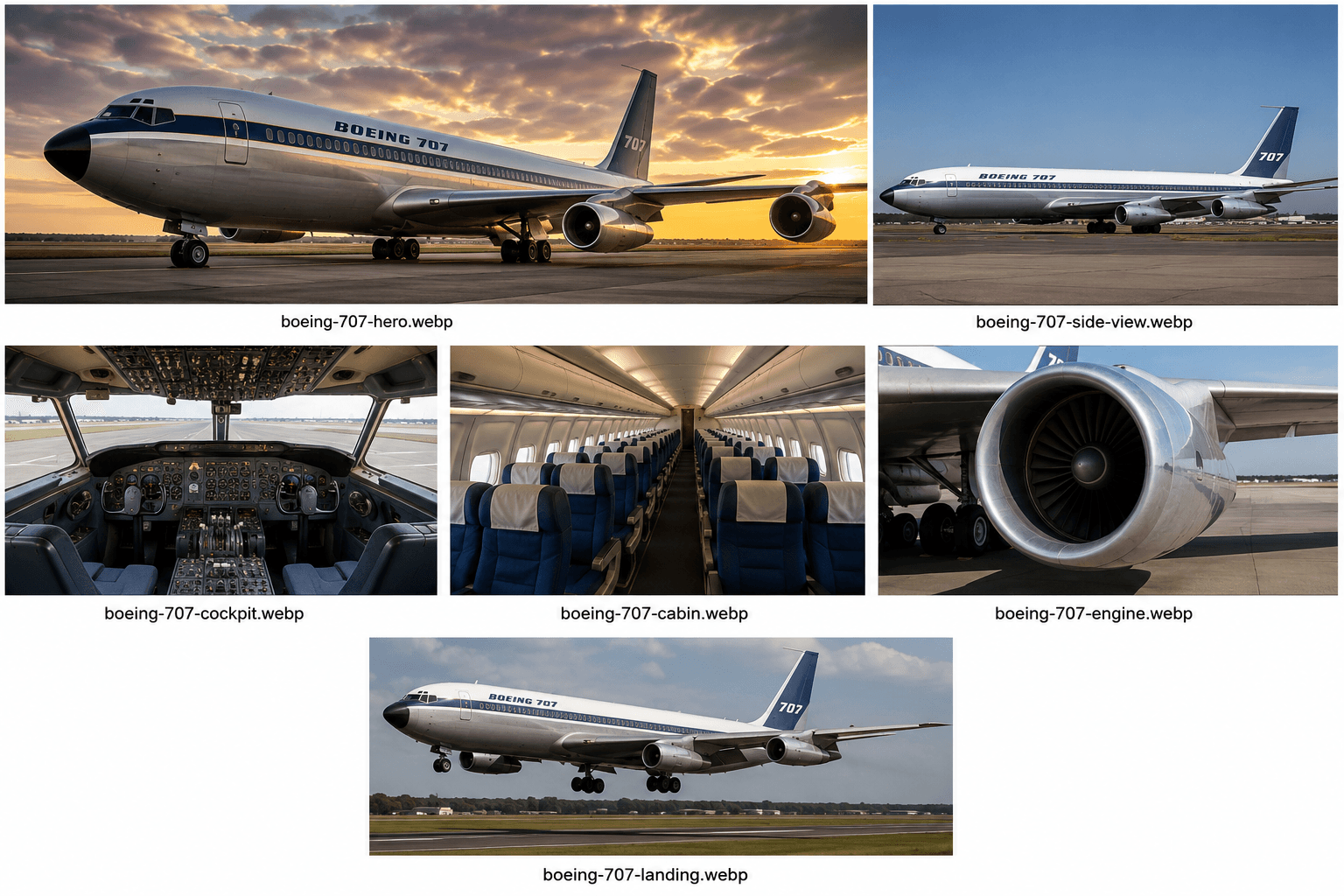
Boeing 717 side profile highlighting its rear-mounted engines and T-tail. 
Modern Boeing 717 glass cockpit featuring Honeywell integrated avionics. 
Typical Boeing 717 passenger cabin configured in a comfortable 2-3 seating layout. 
Rolls-Royce BR715 high-bypass turbofan engine mounted on the rear fuselage. 
Boeing 717 during landing with landing gear fully deployed.
Videos
Boeing 717 Documentary
Boeing 717 Cockpit Tour
How the Boeing 717 Was Developed
Frequently Asked Questions
Recommended Products
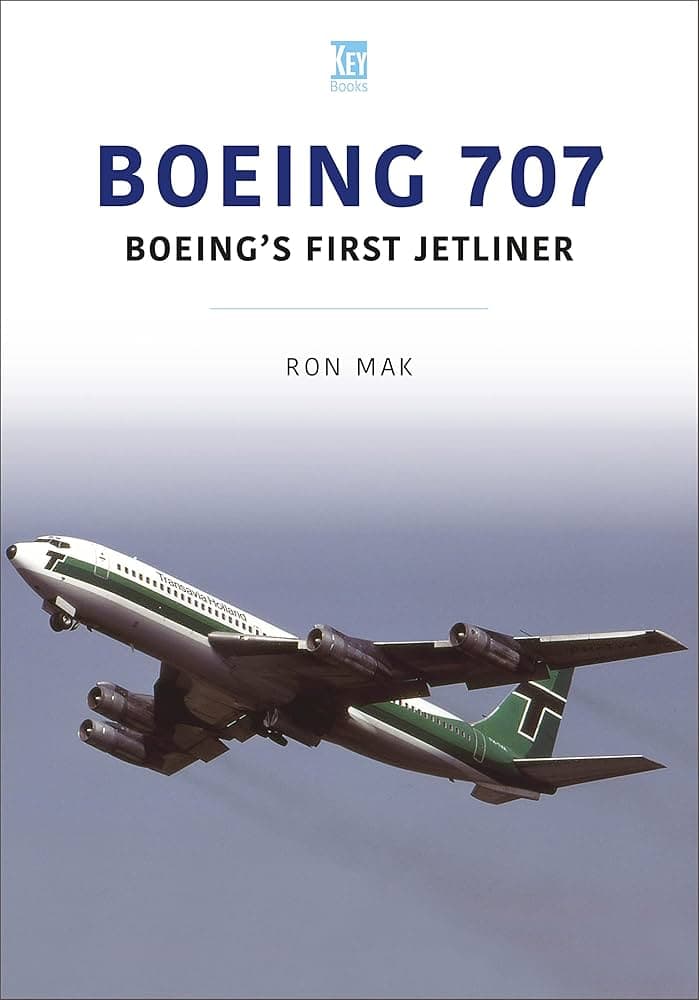
Boeing 707 History Book
Comprehensive reference covering the design, development and operational history of the Boeing 707.
Buy now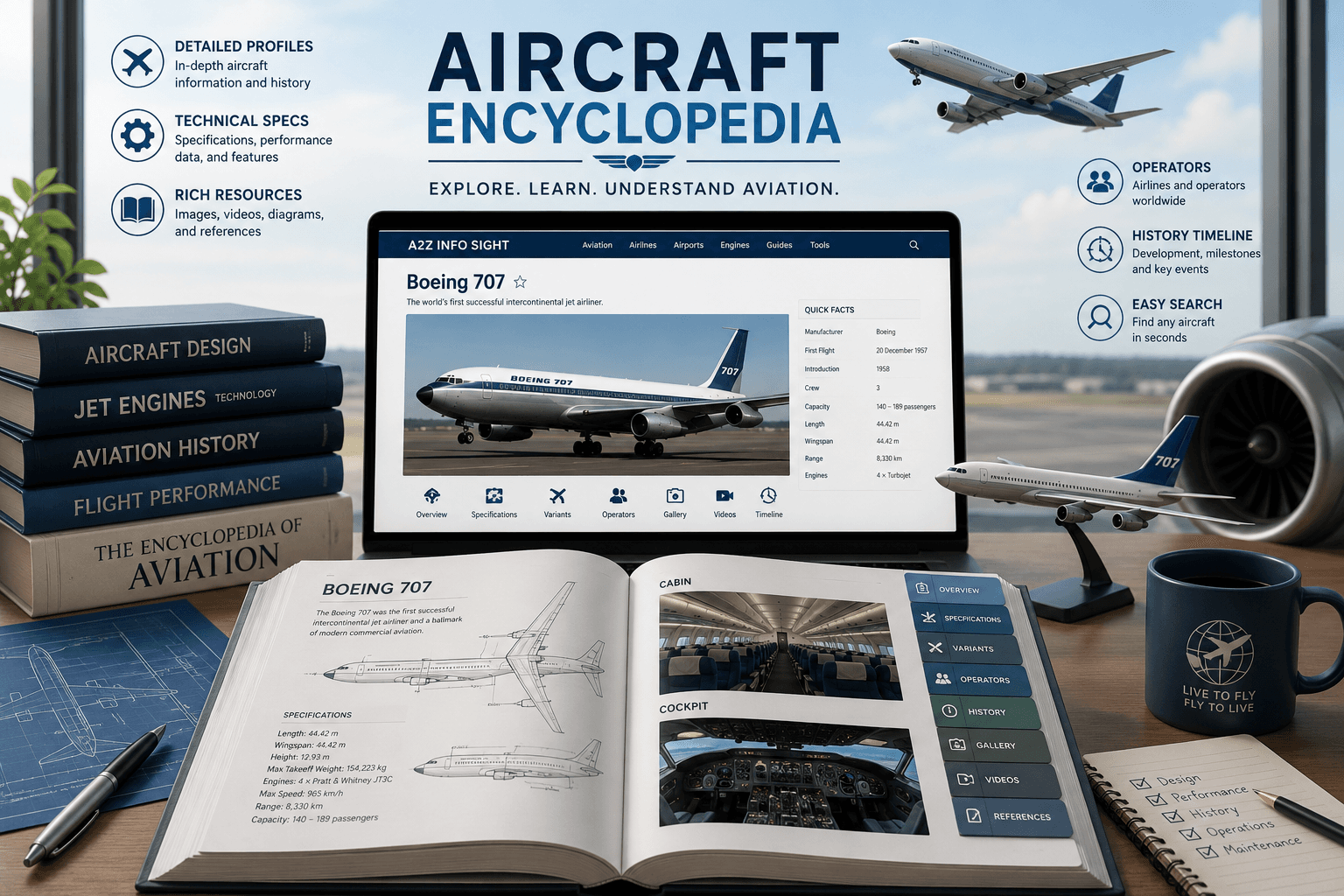
Commercial Aircraft Encyclopedia
A detailed guide covering classic and modern commercial aircraft.
Buy now


As an affiliate, A2Z InfoSight may earn from qualifying purchases.
References
Keep exploring